

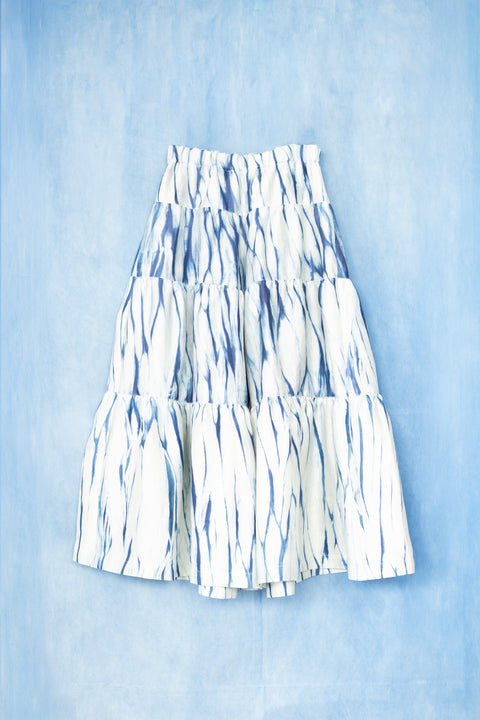
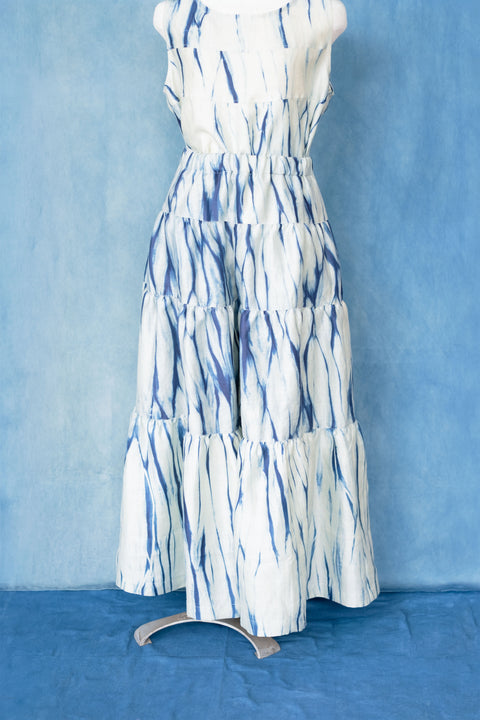
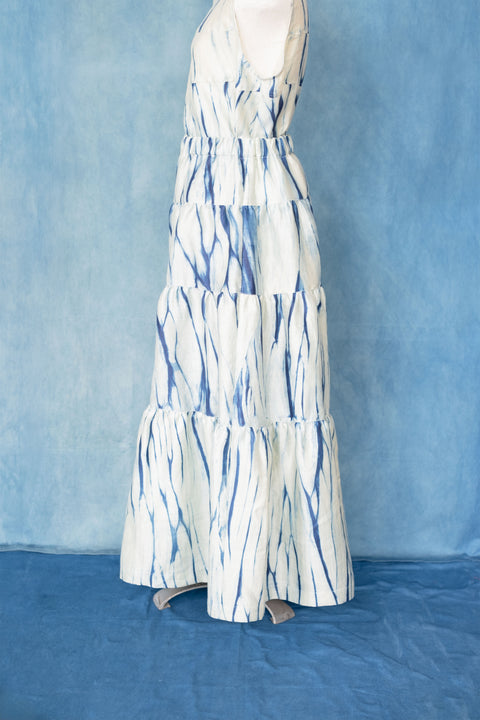
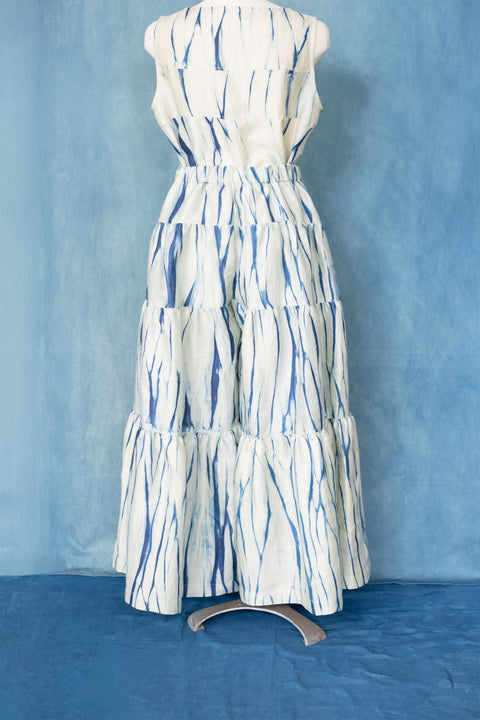
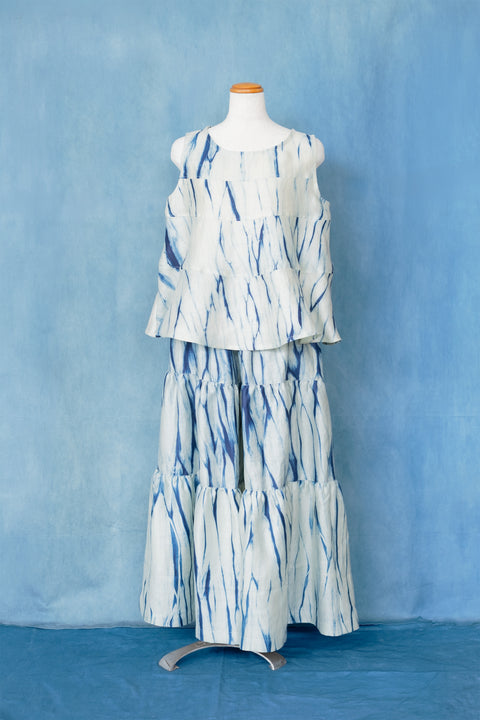
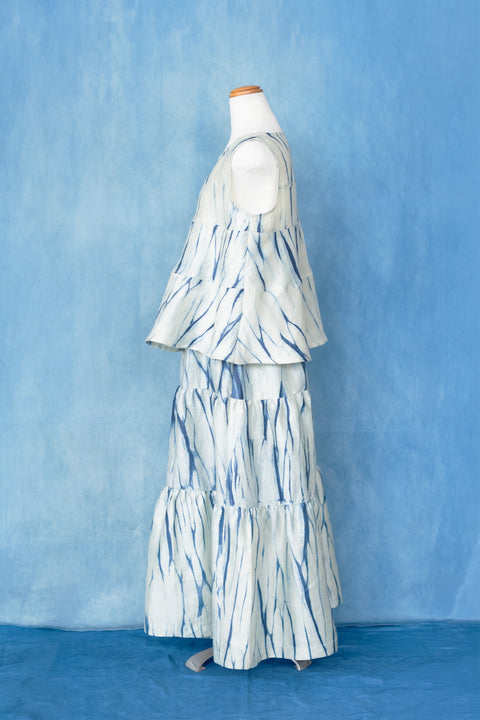
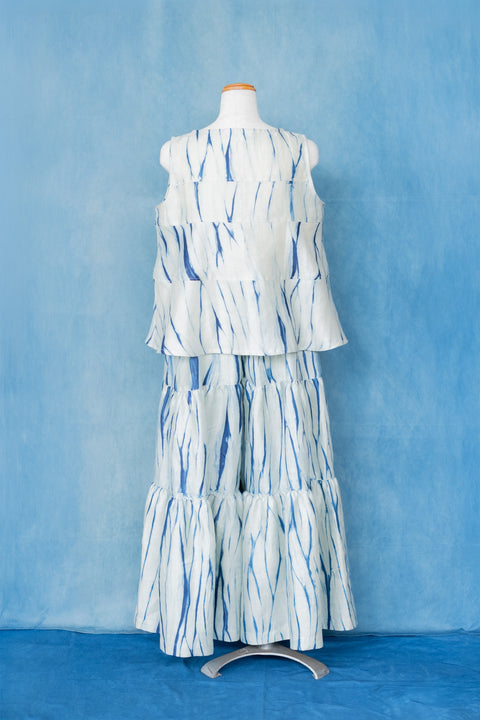
Ryukyu indigo (Ryukyu-ai) has been cultivated in Okinawa since ancient times and is used as a dye for indigo dyeing; it is an indispensable dye for Okinawa’s traditional dyed textiles.
The cultivation process is grueling, requiring meticulous management and technical expertise to grow high-quality indigo leaves, as well as the physical and mental stamina to endure the heavy labor involved in the indigo-making process. Furthermore, discerning the optimal fermentation stage during dye production demands years of experience and skill.
In stark contrast to this labor-intensive, handcrafted indigo production, this dyeing method has fallen largely out of use since the widespread adoption of inexpensive, chemically synthesized indigo, which has become readily available over time.
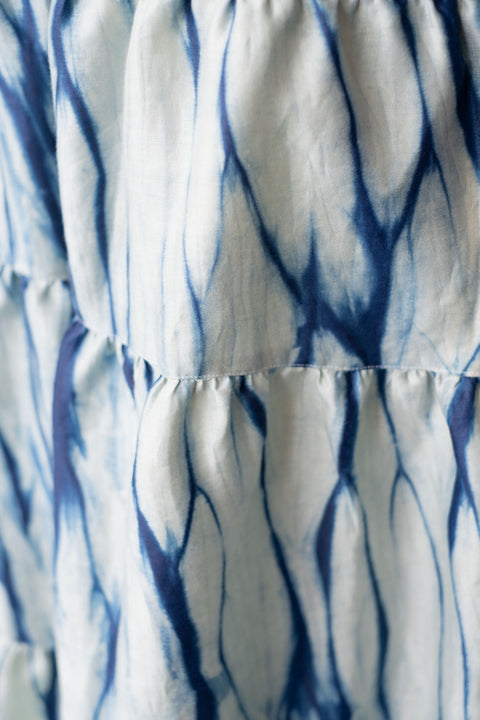
We believe that Ryukyu indigo—created by carefully repeating the process of dyeing and washing each piece by hand, one by one, using methods passed down through generations—embodies the colors of Okinawan culture, with its unique texture and the distinct depth of color found in each individual piece, qualities that cannot be replicated by chemical dyes.
For more information about Ryukyu indigo and how to care for indigo-dyed items, please click here.
The linen used at LEQUIO is made from the “flax” (linen) plant and is fine, soft, and supple. It has the characteristic of becoming more comfortable the more you wash it.
When people hear the words “hemp” or “linen,” some may have the impression that it’s “prickly” or “stiff and rough.” Unlike the strong, stiff varieties of hemp used for ropes and burlap sacks, in Europe, the term “fiber” historically referred specifically to “linen fiber” until cotton and wool became available. Even after cotton and wool were introduced, linen continued to be used—primarily by the upper classes—as a luxury fiber for bedding, towels, and undergarments.
It is highly breathable and excels at absorbing water and moisture. Because the fibers are stiff and resistant to stretching, the fabric won’t cling to your skin even when you sweat, allowing you to stay comfortable even in the summer. Additionally, since it quickly releases absorbed moisture to the outside, it helps prevent the growth of mold and bacteria.
It feels wonderful against the skin and is a garment you’ll cherish for years to come.
For more details about linen and how to care for it, please click here.